HSK 5 · Lesson 1 · Fei's first shift in the restaurant kitchen
Chopping, frying and washing the pot: all mine! 切菜、炒菜以及洗锅,都是我的!
Each lesson is a short story in Mandarin with pictures and audio, the words and grammar it uses, and a talk with Xiaolu at the end. All of HSK 1 is free.
This lesson is free. Start this lesson
- About 27 minutes
- 7 new words
- 2 grammar points
- A 3 to 5 minute talk with Xiaolu at the end
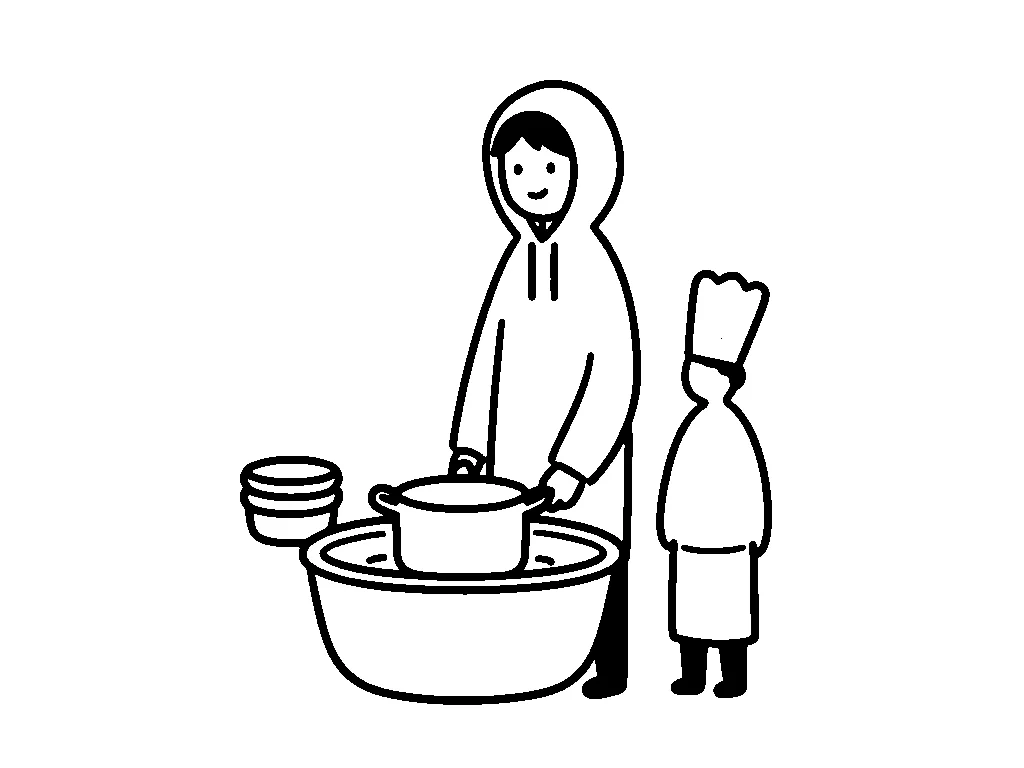
Who is in it
- Fei 林飞 Lín Fēi
- Mr Lin 林先生 Lín xiānsheng
- Head cook 师傅 shīfu
New words
- 锅 guō pot, wok
- 炒 chǎo to stir-fry
- 切 qiē to cut, slice (food)
- 煮 zhǔ to boil, cook in water
- 蔬菜 shūcài vegetables
- 以及 yǐjí and, as well as (closes a list)
- 整个 zhěnggè the whole, entire
The story
In the restaurant kitchen, early morning
- Head cook 你是林飞吧?欢迎,我是这儿的师傅。
- Fei 师傅好!我今天开始上班,我想炒菜!
- Head cook 你的刀和勺子都在这儿,蔬菜在冰箱里。
- Fei 好!我先做什么?
- Head cook 切菜、炒菜以及洗锅,整个上午都是你的!
- Fei 太好了!我现在就切蔬菜。
- Head cook 等一下,昨天晚上的锅还没洗,先洗锅。
- Fei 好,洗完锅我就炒菜!
- Head cook 一共十二个锅,慢慢洗。
- Fei 十二个?没问题!
- Head cook 好小伙子!洗完了,我给你煮面条。
In the restaurant kitchen, mid-morning
- Mr Lin 林飞,我在办公室给你准备了一张桌子。
- Fei 爸爸,我不想坐在办公室里,我想在厨房工作。
- Mr Lin 你今天在厨房做什么?
- Fei 切菜、炒菜以及洗锅,都是我的!
- Mr Lin 你炒了几个菜?
- Fei 一个也没有。我洗了八个锅。
- Mr Lin 八个锅?这不是做菜,是洗东西。
- Fei 可是锅不干净,菜就不好吃。
- Head cook 他说得对。他洗的锅,是我们厨房最干净的。
- Mr Lin 好吧。你什么时候炒菜?
- Head cook 下午开始,如果锅都洗完了。
- Mr Lin 好,办公室的桌子,我给你留着。
Fei's diary, the first day
- 今天,我第一次在饭店的厨房上班。
- 师傅一开始就说,整个上午的工作是:切菜、炒菜以及洗锅。
- 我高兴极了,我以为整个上午都能炒菜。
- 可是师傅先给了我一个大锅,不是干净的,是脏的。
- 昨天晚上的锅一共有十二个,每个都很脏。
- 我洗了第一个,又洗了第二个,洗到第五个的时候,我已经很累了。
- 我的腿也很累,可是我不想休息。
- 师傅在旁边煮汤。汤很香,我一直想去尝一尝。
- 师傅说:“先洗完锅,再喝汤。”
- 我又洗了七个锅,已经十二点了。
- 蔬菜我没有切,菜我没有炒,我只洗了锅、刀和勺子。
- 可是我很开心。我今天知道了:干净的锅,是好菜的开始。
- 我给爸爸发了短信:办公室的桌子,请再留一年。
- 吃饭的时候,师傅给了我一大碗面条。
- 他说:“这是你的,你洗了整个上午的锅,吃吧。”
- 我吃了两碗,真好吃!明天我还要来。
The chef, at noon
- 今天上午,新来的林飞洗了十二个锅,一个菜也没有炒。
- 他一开始很想切菜,也很想炒菜,可是我说:先洗锅,菜等一会儿再做。
- 很多人不喜欢洗锅,他却洗得很认真,一点儿也不着急。
- 他洗得很慢,不过每个锅他都看了两遍。
- 洗完了,每个锅都很干净,没有一点儿脏的地方。
- 他把刀和勺子也洗了,都放回了原来的地方。
- 我很多年以前刚来这儿的时候,也是先洗锅。
- 整个厨房的工作,从洗锅开始。
- 在我们的厨房里,锅是最重要的。
- 好锅能炒菜,能煮汤,也能煮面条。
- 冰箱里有蔬菜、鸡蛋以及羊肉,这些都得用干净的锅做。
- 锅脏了,菜的味道就不对了,客人也不满意。
- 吃面条的时候,他笑着说:“明天我还洗!”
- 他问我:“明天我可以先切蔬菜,再炒菜吗?”
- 一个人愿意洗锅,将来一定能炒好菜。
- 下午就让他试一试,我在旁边看着,希望他今天也很开心。
Grammar
A、B 以及 C (nouns or verb phrases, heaviest last)
以及 closes a list: put 、 between the first items and 以及 before the last, usually the heaviest one. It is written-style 'and, as well as', though it also turns up in emphatic spoken lists, like the title. It joins nouns or verb phrases, never two whole clauses. For two plain nouns, 和 is more natural. A 都 can sum the list up afterwards.
- 切菜、炒菜以及洗锅,都是我的工作。
- 冰箱里有蔬菜、鸡蛋以及羊肉。
- 你的刀、勺子以及锅,都在这儿。
A 和 B + 都 + V
和 joins nouns or pronouns: 刀和勺子. 都 then sums them up and stands after the subject, before the verb: 刀和勺子都在这儿. Never put 都 directly before a noun, and never use 和 to join two clauses.
- 刀和勺子都在这儿。
- 林飞和林先生都在厨房。
A saying
万事开头难 Literally: 'of all things, the beginning is hard'. Whatever you start, the first step is the hardest part. People say it to encourage someone who is just beginning, like a first morning at the sink: once you are under way, it gets easier.
What you will be able to say
The lesson ends with a talk. It is your first shift in a restaurant kitchen. Tell the chef which jobs you will do this morning using 以及, say that you worked the whole morning, and say what you want to cook.
- I can list my jobs and close the list with 以及. 我今天要切菜、炒菜以及洗锅。
- I can say that something took the whole morning (整个). 我洗了整个上午的锅。
- I can say what I want to boil or cook in water (煮). 我想煮面条。
- I can talk about vegetables (蔬菜). 冰箱里有很多蔬菜。
- I can ask the chef what to do first and say my plan for the morning. 师傅,我先做什么?
The closing talk needs an account. On the free plan, the first lesson talk you take in each level is free; Plus and Ultimate use the month's Talk minutes.
This lesson is free. Start this lesson