HSK 4 · Lesson 42 · The doctor's prescription for stress
A walk does you good 散步对身体有好处。
Each lesson is a short story in Mandarin with pictures and audio, the words and grammar it uses, and a talk with Xiaolu at the end. All of HSK 1 is free.
This lesson is in Plus. Start this lesson
- About 28 minutes
- 7 new words
- 2 grammar points
- A 3 to 5 minute talk with Xiaolu at the end
Who is in it
- Fei 林飞 Lín Fēi
- Dr Bai 白医生 Bái yīshēng
- Mr Lin 林先生 Lín xiānsheng
- Dawang 大王 Dàwáng
New words
- 减肥 jiǎnféi to lose weight, diet
- 散步 sànbù to take a walk
- 压力 yālì pressure, stress
- 放松 fàngsōng to relax
- 轻松 qīngsōng relaxed, easy
- 使 shǐ to make, cause (使人轻松)
- 好处 hǎochù benefit, advantage
The story
At home, before dinner
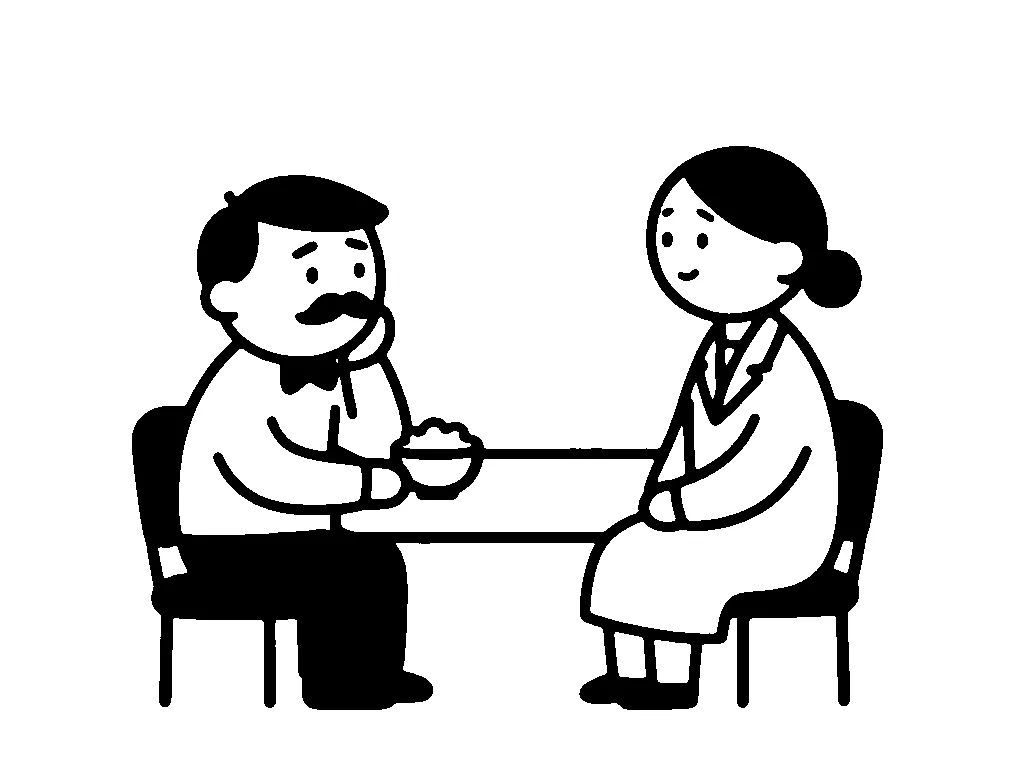
- Mr Lin 我最近很累,工作也多。
- Dr Bai 你没发烧,也没感冒。
- Dr Bai 散步对身体有好处。
- Mr Lin 好处我知道,可是压力太大了。
- Dr Bai 散步使人轻松。
- Fei 妈妈,散步可以减肥吗?
- Dr Bai 可以。我让你们每天走半小时。
- Fei 走完了,我可以多吃一碗米饭吗?
- Dr Bai 可以。先走,然后吃。
At the table at home, with the map
- Mr Lin 地图我看完了,路很简单。
- Mr Lin 先往左,再往左,然后再往左。
- Fei 往左三次?我们就回到家了。
- Mr Lin 你说得对……我再看看。
- Dr Bai 我让你散步,不让你找路。
- Mr Lin 好,我不看地图了。
- Fei 我走在前面,你们跟我一起走。
- Dr Bai 好。先走半个小时。
On the path outside the flat
- Fei 大王,你坐下,放松一下。
- Fei 你看,它不听我的。
- Dr Bai 你让它放松,它就不放松。
- Fei 你有什么办法?
- Dr Bai 我们去散步,别看它。
- Fei 它也来了!没人让它散步。
- Dr Bai 对,它自己想散步。
- Fei 它走得很轻松,比我们还轻松。
- Dr Bai 好,走完了,我们都放松一下。
Fei tells how the walk went
- 昨天,爸爸说他的压力太大了。
- 妈妈没给他药,只让他每天散步。
- 散步使人轻松,对身体也有好处。
- 我们从家里出发,爸爸看了很久的地图。
- 可是他往左走了三次,我们又回到了家。
- 爸爸说:“地图是对的,是路错了。”
- 妈妈说:“我让你散步,不让你找路。”
- 后来我走在前面,大家去了公园。
- 公园里有很多树,空气也很新鲜。
- 大王也和我们一起去了,我让它放松,它不放松。
- 回来的时候,大家都很轻松。
- 散步让我很饿,可是我也很开心。
- 今天晚上,我想多吃一碗米饭。
Grammar
A + 让 + B + V / A + 不让 + B + V
让 means 'make' or 'let': the person after 让 is the one who does the action. 我让你散步 means 'I have you take a walk'. For 'not allowed', use 不让: 我不让你找路. This is the spoken pattern. Write 不让, never 让不.
- 我让你们每天走半小时。
- 我让你散步,不让你找路。
- 你让它放松,它就不放松。
A + 使 + O + V / Adj
使 also means 'make, cause', but it is more formal than 让 and sounds like writing or a set phrase: 散步使人轻松, 'a walk makes people relaxed'. 使 states a result. It never takes a command: say 让他休息, never 使他休息. In speech, 让 is still the usual choice.
- 散步使人轻松。
- 散步使人开心。
- 音乐使人快乐。
Characters
- 松 first meant a pine tree, so 木 stands on the left for the meaning and 公 on the right for the sound. In 放松 and 轻松 it means loose, not tight.
- 轻 车 on the left is the meaning: the character belongs to the world of carts and loads. The right-hand part is a simplified form of 巠 and gives the sound. From light loads the word grew to mean easy and relaxed, as in 轻松.
A saying
千里之行,始于足下 Literally: a journey of a thousand li (a li is about half a kilometre) begins under your feet. People mean that every big task starts with one small step, like the first walk of the day.
What you will be able to say
The lesson ends with a talk. Play the doctor for Xiaolu, who is worn out by stress: say what you advise, say what a walk does for people, and say whether walking counts as losing weight.
- I can say what a walk does to people with 使. 散步使人轻松。
- I can say what I have the patient do, with 让 or 不让. 我让你每天散步半个小时。
- I can talk about stress with 压力. 你的压力太大了。
- I can say what a walk is good for, using 好处. 散步对身体有好处。
- I can answer whether walking counts as losing weight. 散步可以减肥。
The closing talk needs an account. On the free plan, the first lesson talk you take in each level is free; Plus and Ultimate use the month's Talk minutes.
This lesson is in Plus. Start this lesson