HSK 4 · Lesson 51 · End of a long shift
You've worked hard! Take a break 辛苦了!休息一下吧。
Each lesson is a short story in Mandarin with pictures and audio, the words and grammar it uses, and a talk with Xiaolu at the end. All of HSK 1 is free.
This lesson is in Plus. Start this lesson
- About 28 minutes
- 5 new words
- 2 grammar points
- A 3 to 5 minute talk with Xiaolu at the end
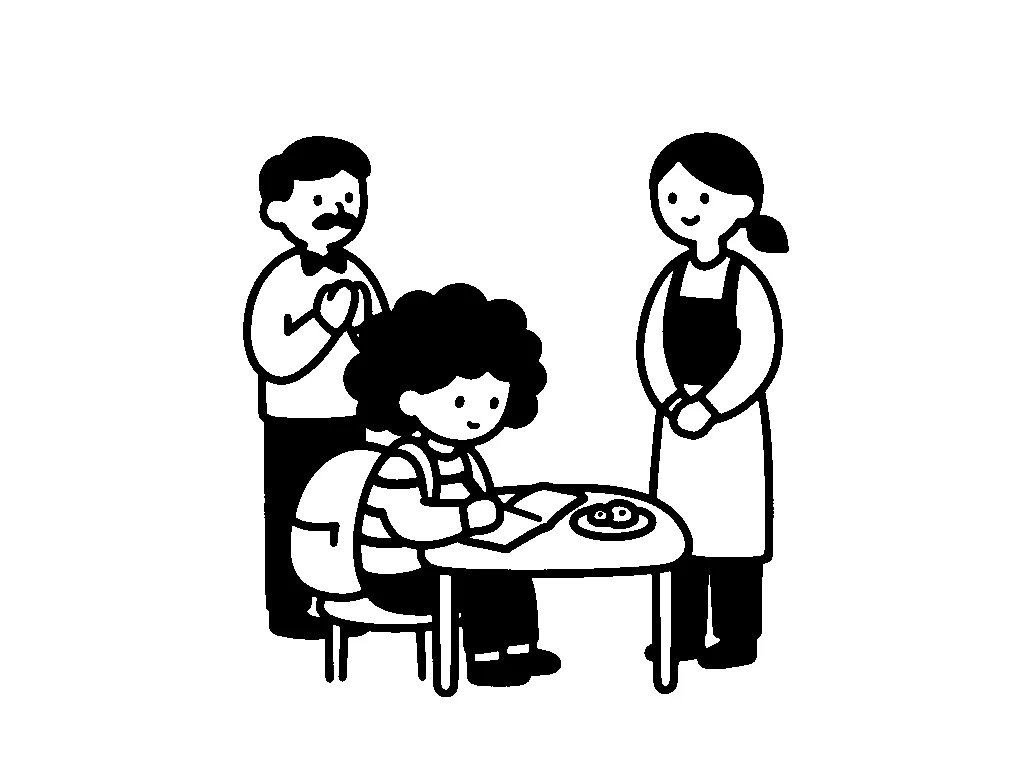
Who is in it
- Mia 米亚 Mǐyà
- Mr Lin 林先生 Lín xiānsheng
- Waiter 服务员 fúwùyuán
New words
- 勇敢 yǒnggǎn brave
- 积极 jījí active, enthusiastic; positive
- 辛苦 xīnkǔ hard-working, tiring; 辛苦了 (thanks for your effort)
- 得意 déyì pleased with oneself
- 烦恼 fánnǎo worried, troubled; worries
The story
The restaurant dining room, closing time on Saturday
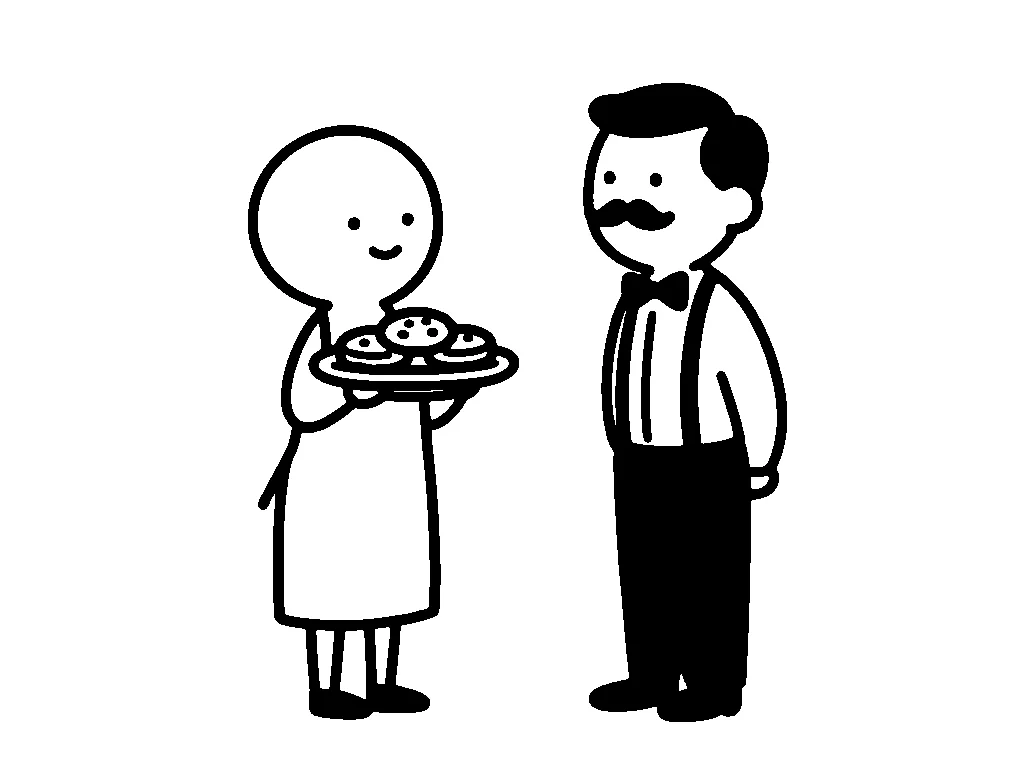
- Mr Lin 那些过生日的客人呢?蛋糕还没到,他们没生气吧?
- Waiter 没有!我勇敢地告诉他们:蛋糕还没到。
- Mr Lin 然后呢?
- Waiter 我拿了饼干,放在大盘子里。
- Waiter 我还和他们一起唱歌了。我今天很积极吧?
- Mr Lin 你很勇敢,一点儿也不着急。
- Mr Lin 辛苦了!休息一下吧。
- Waiter 谢谢!我自己也很得意!
The restaurant front desk, after closing
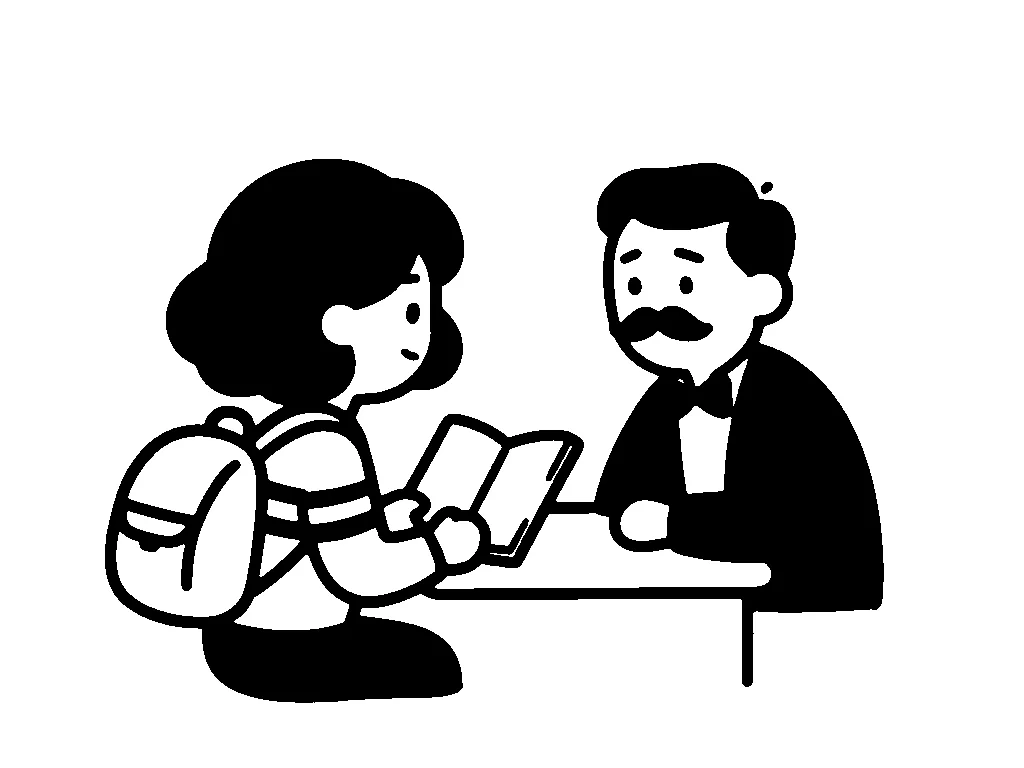
- Mr Lin 米亚,辛苦了!休息一下吧。
- Mia 林先生,你今天一共说了七次“辛苦了”。
- Mr Lin 七次?你怎么知道?
- Mia 表格上有。第一页是客人,第二页是你说的“辛苦了”。
- Mr Lin 你的表格有第二页了?
- Mia 对。以前是一页,现在是两页了,我很烦恼。
- Mr Lin 好,第八次:米亚,辛苦了!
- Mia 谢谢!……八次。第二页还有地方。
- Mr Lin 你看,别烦恼了。先休息一下吧。
- Mia 好,我明天再看第二页。
At a table near the kitchen door, the last of the staff
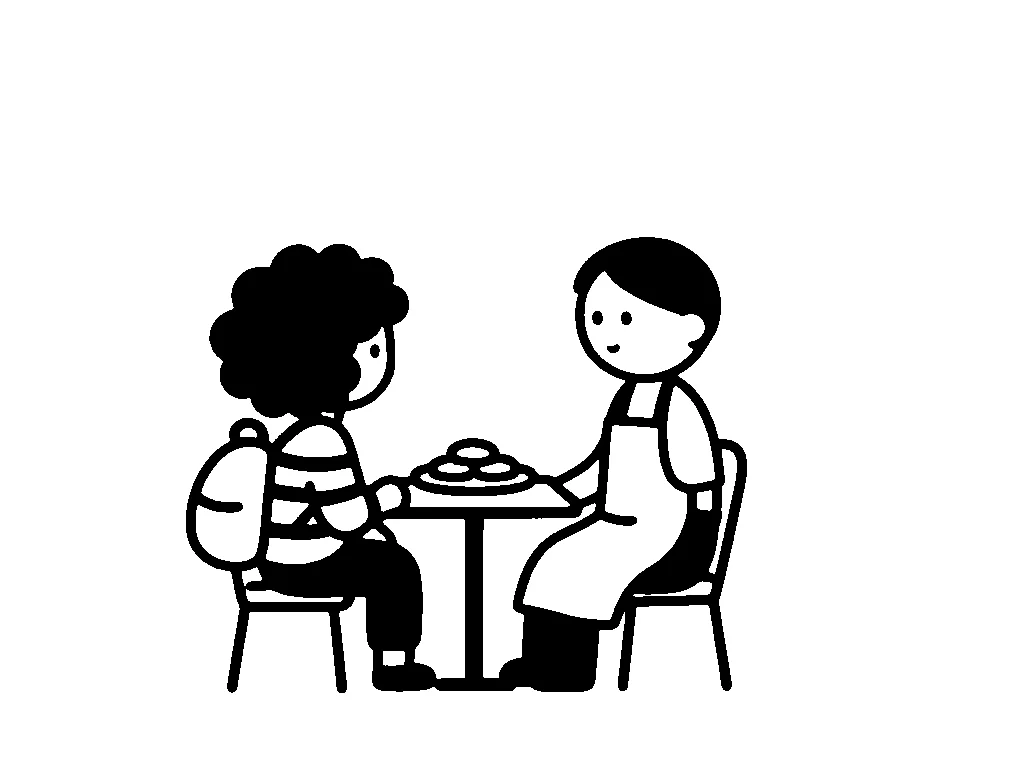
- Mia 你怎么想到用饼干的?
- Waiter 我想了一下,蛋糕和饼干都是甜的。
- Mr Lin 客人高兴地唱了两遍,还说明天再来。
- Mia 你好像很得意。
- Waiter 当然!我今天又积极又勇敢。
- Mia 我今天也很积极,可是我有一个烦恼。
- Mr Lin 我知道,是第二页。别烦恼了,吃饼干吧!
- Waiter 好!林先生,你也休息一下吧。
- Mr Lin 好,我们都休息一下。辛苦了!
Mia's notes at the end of the day
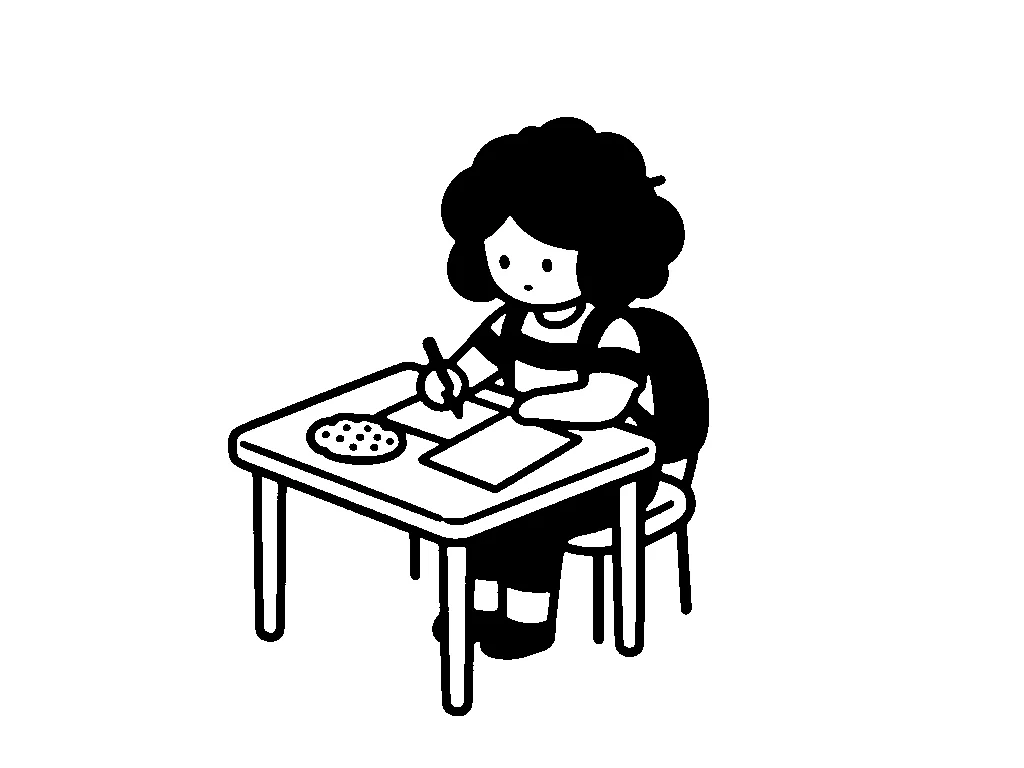
- 星期六晚上,林先生对每个人都说了“辛苦了”。
- 有一些客人在这儿过生日,可是蛋糕还没到。
- 服务员勇敢地告诉客人:蛋糕还没到。
- 然后她把饼干放在大盘子里,和客人一起唱歌。
- 客人高兴地笑了,她也很得意。
- 服务员说她今天很积极,林先生说她很勇敢。
- 我也很积极,可是我有一个烦恼。
- 我的表格有第二页了!
- 第一页是客人,第二页是林先生说的“辛苦了”。
- 他今天说了九次,我都写在第二页上。
- 最后,他又说:“休息一下吧!”
- 我们都休息了一下,然后回家了。
Grammar
V + 一下 (+ 吧); 别 + V + 了; 一起 + V
一下 after a verb makes the action short and polite: 休息一下, 'take a short rest'. Add 吧 to suggest it: 休息一下吧. To say 'stop doing it', use 别 + verb + 了: 别烦恼了. 一起 comes before the verb: 一起唱歌. Never mix them: say 别烦恼了, not 别烦恼一下.
- 辛苦了!休息一下吧。
- 你等一下。
- 别烦恼了。
- 我们一起吃饼干吧。
Adj / phrase + 地 + V
地 links a describing word to the verb that follows it: 勇敢地告诉, 'told bravely'. It always comes before the verb. Compare 的, which comes before a noun (勇敢的服务员), and 得, which comes after a verb (唱得很好).
- 我勇敢地告诉他们:蛋糕还没到。
- 客人高兴地唱了两遍。
- 她积极地工作。
Characters
- 勇 力 (strength) gives the meaning and 甬 gives the sound. Being brave takes strength, so 勇 is 'bold'. Add 敢 and you get 勇敢, brave.
- 苦 The plant radical 艹 is on top because 苦 first meant a bitter plant. 古 below gives the sound. From 'bitter' it came to mean 'hard': so 辛苦 is hard, tiring work.
A saying
初生牛犊不怕虎 'A newborn calf is not afraid of a tiger.' A young calf does not yet know how dangerous a tiger is, so it faces it boldly. People say it about someone new or young who bravely tries something big, because they do not know to be afraid.
What you will be able to say
The lesson ends with a talk. It is the end of a long shift and you are the manager. Thank Xiaolu for her effort, suggest a short rest, say what she did bravely, and then either tell her she looks pleased with herself or tell her to stop worrying.
- I can suggest a short rest or a short wait with V + 一下. 我们休息一下吧。
- I can say how someone does something with 地 before the verb. 你勇敢地告诉了客人。
- I can thank someone for their effort with 辛苦了. 辛苦了!休息一下吧。
- I can say I have a worry, or tell someone to stop worrying. 我有一个烦恼。
- I can say someone is pleased with themselves. 你好像很得意。
The closing talk needs an account. On the free plan, the first lesson talk you take in each level is free; Plus and Ultimate use the month's Talk minutes.
This lesson is in Plus. Start this lesson